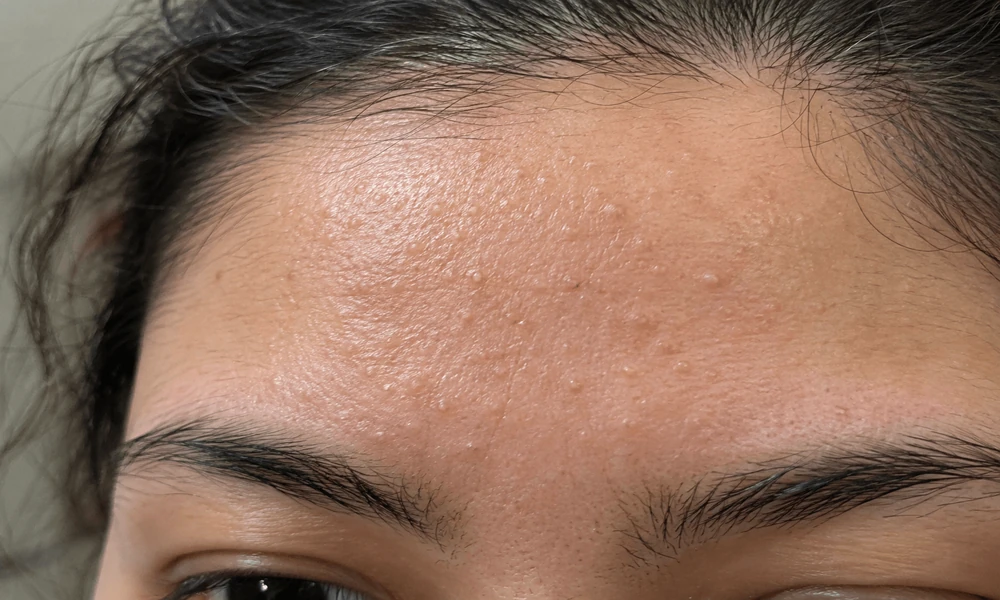
You run your fingers across your forehead and feel it. Rough little bumps. They aren’t red. They don’t hurt. You can barely see them in the mirror, but foundation sits on top of them like sand on a road.
If that sounds familiar, you’re not alone. These bumps are one of the most common skin complaints in Pakistan, and one of the most ignored. Most people try a scrub, scrub harder, and end up with irritated skin and the same bumps.
The good news: they usually clear with the right routine. For most people, the key step is a gentle exfoliating toner like a glycolic acid toner, used the right way and given enough time.
This guide explains what the bumps are, why they keep returning, and a simple routine to smooth them out.
Quick answer: Those bumps are usually closed comedones, tiny pores blocked under the skin. Clear them by exfoliating gently 3 to 4 nights a week, washing with a mild cleanser, using a light moisturiser and wearing sunscreen. Expect visible change in 4 to 8 weeks.
What Are These Tiny Bumps, Really?
In most cases, the small skin-coloured bumps on your forehead are closed comedones. Think of them as whiteheads that never came to the surface. DermNet, a dermatologist-run reference, describes them as follicles that are completely blocked.
Here is what happens. Your skin sheds dead cells every day. Normally they fall away. Sometimes they stick together, mix with oil, and plug a pore just below the surface. The plug has no opening, so it stays trapped and shows up as a small bump.
How to tell if you have closed comedones
• The bumps are small, firm and the same colour as your skin
• They are easier to feel than to see
• They show up most on the forehead, chin and sometimes the cheeks
• They don’t hurt and aren’t red, unless they turn into a pimple
• Makeup looks patchy or cakey over them
When it might be something else
A few other conditions look similar. Fungal acne (Malassezia folliculitis) causes small, itchy bumps of the same size and is more common in hot, humid weather. Milia are hard, white and pearl-like, and don’t respond to exfoliation. If your bumps itch, burn or don’t change after two months of care, see a dermatologist.
Why the Bumps Keep Coming Back
Closed comedones don’t appear from nowhere. Something is helping dead skin and oil build up. These are the most common triggers in Pakistan.
Heat, sweat and humidity
Summers here are long and sticky. Sweat and oil sit on your forehead for hours, especially under a dupatta, hijab, cap or helmet. That mix clogs pores fast.
Heavy creams and hair oil
Thick night creams, petroleum-based balms and hair oil are common culprits. Oil from your hair slides onto your forehead while you sleep. Many people notice bumps right along the hairline for this reason.
Not removing makeup or sunscreen properly
Water-resistant sunscreen and long-wear foundation don’t come off with a quick splash. Leftover product builds up in the pores night after night.
Over-scrubbing
This one surprises people. Harsh scrubs make tiny cuts in the skin and strip its barrier. Your skin reacts with more oil and faster cell build-up, which means more bumps.
Skipping exfoliation completely
The opposite problem matters too. If dead cells never get a gentle push to shed, they keep stacking up inside the pore.
The Solution: A Simple Routine to Smooth Your Forehead
You don’t need ten products. You need a few steps done consistently. The goal is to loosen the plug, keep pores clear, and protect your skin while it heals.
Why glycolic acid works for this problem
Glycolic acid is an AHA (alpha hydroxy acid). It loosens the “glue” that holds dead skin cells together, so they shed evenly instead of piling up in your pores. Over a few weeks, plugs soften and the skin surface feels smoother.
It works gently on the surface, so there’s no rubbing or tearing like a gritty scrub. A 7% toner is a sensible strength for regular home use. The American Academy of Dermatology also advises choosing your exfoliation method based on your skin type and going gently.
Your evening routine
1. Remove makeup and sunscreen. Use micellar water or a cleansing balm first if you wore makeup or water-resistant sunscreen.
2. Wash with a mild cleanser. Choose one that leaves your skin clean, not tight or squeaky.
3. Pat dry and wait a minute. Exfoliants sting more on damp skin.
4. Apply the toner. Put a few drops on a cotton pad and sweep it over your forehead, nose and chin. Avoid the eye area and the corners of your nose.
5. Moisturise. Use a light, oil-free lotion or gel. Skin that is too dry makes more oil.
Your morning routine
1. Rinse with water or a gentle cleanser.
2. Apply a light moisturiser.
3. Finish with broad-spectrum sunscreen, SPF 30 or higher. AHAs make skin more sensitive to the sun, so this step is not optional.
The U.S. Food and Drug Administration notes that products with alpha hydroxy acids can make skin more sensitive to the sun, and recommends sun protection while you use them.
How often to use the toner
Go slowly. Your skin needs time to adjust.
| Week | How often | What to watch for |
|---|---|---|
| 1-2 | 2 nights a week | Mild tingling is normal; burning is not |
| 3-4 | 3 nights a week | Skin starts to feel smoother |
| 5 onwards | Up to every other night | Bumps flatten and makeup sits better |
If your skin turns red, flaky or stings for more than a few minutes, drop back a step for a week.
Small habits that make a big difference
• Wash your pillowcase twice a week
• Keep hair oil off your forehead, or wash your face after oiling your hair
• Wipe sweat with a clean tissue instead of your dupatta or sleeve
• Clean your helmet pad, cap band or hijab underscarf often
• Swap heavy creams for lighter, non-comedogenic ones in summer
Common Mistakes That Make Bumps Worse
• Picking or squeezing. Closed comedones have no opening. Squeezing pushes the plug deeper and can leave a dark mark.
• Using a scrub and an acid on the same night. That’s double exfoliation. Pick one.
• Mixing too many actives. Don’t use retinol, glycolic acid and vitamin C all on the same night when you’re starting out.
• Expecting results in a week. Pores take time to clear. Most people give up just before it starts working.
• Skipping sunscreen. Without it, exfoliated skin can darken and get irritated.
How Long Until You See Results?
Everyone’s skin is different, but here is a realistic timeline:
• Weeks 1-2: Skin may feel a little smoother. A few bumps can surface as small pimples. This is the plug coming out, and it settles quickly.
• Weeks 3-6: Texture improves. Makeup starts sitting better.
• Weeks 6-8: Most bumps are flatter or gone. Keep going to stop new ones forming.
Once your forehead is clear, you can keep the toner at 2 to 3 nights a week as maintenance.
When to See a Dermatologist
Book an appointment if:
• Nothing changes after 8 to 10 weeks of steady care
• The bumps turn into painful, deep pimples
• Your skin reacts badly to every product you try
A dermatologist can confirm what the bumps are and suggest stronger treatment if you need it.
Frequently Asked Questions
Can I use a glycolic acid toner every day?
Not at first. Start with 2 nights a week and build up slowly. Some people with oily skin end up using it most nights, but many do best on alternate nights.
Is glycolic acid safe for sensitive skin?
It can be, if you go slowly. Try a patch test on your jawline for 3 nights first. If you get burning, redness or peeling, stop and speak to a dermatologist.
Will a face scrub remove these bumps faster?
Usually not. Scrubs only polish the top layer and can irritate the skin. The plug sits inside the pore, where a chemical exfoliant works better.
Can I use it in summer?
Yes. Use it at night only, and wear sunscreen every morning. Reapply sunscreen if you’re outdoors for long.
Conclusion:
Those stubborn forehead bumps aren’t a sign that your skin is dirty or that you’re doing everything wrong. They’re tiny plugged pores, and they respond well to a gentle, steady routine.
Cleanse kindly. Exfoliate a few nights a week. Moisturise lightly. Wear sunscreen every day. Give it 6 to 8 weeks, and your forehead should feel smooth enough that you notice the difference every time you touch it.